Beginnings
In the Andean sphere there is no concept of the creation of the world. Those who populated the Andes said they had emerged from their places of origin fully attired with head adornments and weapons. For the Incas, this place of origin was a cave; the Chancas said they had come from two lakes while others considered their pacarinas to be the sea, volcanoes or snow peaks.
Subir
Legend of the Brothers Ayar
One of the main myths about the origin of the Incas was the one about the Ayar brothers originating from a cave named Pacaritambo, Tambo of Production, Tambo of Dawn, or Hideaway House. This place was found on the hill Tambotoco, the same one that has three windows. From one of these windows, Maras Toco, the group of the Maras Sutic issued "without being generated by parents", like spontaneous generation. From the other window, Capac Toco, issued four brothers whose names were Ayar Uchu, Ayar Cachi, Ayar Mango and Ayar Auca. They were accompanied by their four sisters, Mama Ocllo, Mama Huaco, Mama Ipacura or Cura and Mama Raua. Each chronicler, according to his informants' references recounts these episodes with small variations.
The legendary Ayar with their sisters began a slow walk through punas and ravines of the cordillera with the purpose of finding a proper place to take up residence. It is interesting to note that in Guaman Poma's version Mama Huaco is mentioned as the mother of Manco Capac and an incestuous relationship between them is alluded to.
"In the psychoanalytic analysis of the myth the two fundamental prohibitions, that of incest and that of parricide, are not found, rather the existence of a network of fraternal relationships is shown in which incest appears to be given. In this myth the conjugal couple does not exist, just the binomial mother/son. Within that system of relations the prohibition performed by the father inside the triangle is absent. From this perspective, the kinship system present in the myth of the Ayar seems to imply a dual relationship between son and mother" (Hernandez and others 1987).
According to the narrative of the chroniclers, the brothers lost no time in getting rid of Ayar Cachi out of fear of his magic powers, since with one single shot from his sling he could demolish mountains or make ravines rise up. With tricks they convinced him to return to Pacaritambo to bring the "napa", the insignia of nobles and some golden vessels called "topacusi" that they had left behind. Once Ayar Cachi went into the cave they closed it up with blocks of stone, and he remained trapped there forever. After this episode, the Ayar continued their route through the mountainous terrain.
It is important to emphasize that the brothers, in spite of not having a fixed settlement, did not stop being farmers. Thus it is that once they were established in a place they stayed for some years, and after achieving the harvest they once more took up their trek.
Sarmiento de Gamboa tells that in their pilgrimage, the brothers arrived at a place called Guanacancha four leagues from Cuzco.
They stayed there for a time sowing and harvesting, but were not content so they took up their trek until they arrived in Tamboquiro where they spent a few years. Later they arrived in Quirirmanta, at the foot of a hill. In that place a council was held among the siblings, in which they decided that Ayar Uchu should remain there transformed into a renowned huaca named Huanacauri. In the Andean sphere, to adopt a lithic form was a way of perpetuating a divinity or making a personage sacred, therefore the stone form assumed by Uchu did not impede his communicating with his siblings.
The same chronicler mentions that Mama Huaco was one of the chiefs of the group and that in the town of Matagua, this "very strong, right hand" took two staffs of gold and threw them to the north, one fell in Colcabamba, but the hard earth did not let it to sink in. She threw the second to a piece of land named Guayanaypata where it penetrated smoothly. Other informants told Sarmiento de Gamboa that it was Manco Capac and not Mama Huaco who threw the magic cane that had to indicate the definitive settlement.
The nomadic ayllus tried to arrive at the indicated place, but met with resistance from the native people. They were forced to return to Matagua. While they remained there, Manco Capac ordered Ayar Auca to go populate the place indicated by the staff. Carrying out his brother's order, Auca flew to the place mentioned, but when his foot touched the earth, he turned into stone. According to Andean belief, the "guanca" or stones were cairns indicating the form for the possession of space. Thus it is that the lithic aspect of Auca was the first to occupy the chosen place, so long awaited, and ordered Ayar Mango from then on to be called Manco Capac. According to Sarmiento de Gamboa, in the language spoken then, "Cuzco" meant to occupy a space in a magical way. For Garcilazo, "Cuzco" was the "navel" of the world in the private language of the Incas.
Cieza de Leon uses similar terms to tell of the arrival of Manco and his people in Cuzco and adds that the neighborhood was densely populated, but that its inhabitants made a place for the recent arrivals.
The myths narrated so far, referring to the way ancient Cuzco was inhabited by the Incas, are totally different stories from the version given by Garcilazo. The legend of the Ayar, with the transformations of personages into stone or sacred "guanca", in addition to the long pilgrimage of Manco's group, are very Andean episodes which are also present in the myths of other ethnicities. The transhumance of the Incas was not of primitive bands of herders and hunters, but rather those of essentially agricultural peoples, exceedingly concerned in finding lands to cultivate.
In these narratives, one of Manco Capac's two women plays the special role we have seen in the version in which, in spite of being a woman, Mama Huaco was the commander who threw the founding staff for taking symbolic possession of Cuzco.
According to what the chroniclers say, Mama Huaco took hold of a "haybinto" (bolas) and, making it spin in the air wounded one of the Guallas, ancient inhabitants of Acamama, later she opened his chest and taking out his lungs, blew strongly into them. The ferocity of Mama Huaco terrified the Guallas who abandoned the town, giving way to the Incas.
In an earlier study we have analyzed the feminine figure of Mama Huaco and what it means and represents in the sociopolitical order of the Incas. She was the prototype of the mannish woman and warrior, in opposition to Mama Ocllo, second wife of Manco Capac. Cabello de Valboa recounts that Mama Huaco performed the function of valiant captain and led armies. This masculine characteristic was explained in Aymara with the word "huaco", which in that language represents the mannish woman who is not intimidated by the cold or by work and who is free.
According to Sarmiento de Gamboa, the four leaders who commanded the ayllus in the arrival at Cuzco were Manco Capac, Mama Huaco, Sinchi Roca and Mango Sapaca. It is important to stress that Mama Huaco is named among the four chiefs of the group.
It does not interest us to know whether the facts are true or mythical. With this coya we find women taking an active part in the conquest of Cuzco, fighting together with the men and leading an army. In the Cuzco legends she is not a unique example, in the war against the Chancas, the curaca Chañan Curi Coca was the female chief of the ayllus of Choco-Cachona. In the same legend, through the long-eared nobles we know about the aid provided by the "pururauca", magic stones which in the heat of the moment of battle became transformed into soldiers and accomplished the Inca triumph. What is interesting in the myth is the existence of masculine and feminine "pururauca" or that the army was not an occupation reserved only for men.
These myths referring to the establishment of the Incas are basic because they reveal their worldview and sociopolitical structures. Manco Capac and his ayllus inhabited lower Cuzco and his dwelling was a temple of indicancha, while the followers of Auca were settled down and installed in the upper half or hanan. The division into halves has, in its context, a sense of gender and comprehends an opposition and complementarity between the moieties of Hanan and Hurin. Garcilazo de la Vega confirms that criterion on saying that the elder brothers populated the upper part and the followers of the "queen" were second brothers and populated Hurin Cuzco.
Through the news of Garcilazo we would have the men of Hanan were masculine/masculine and those of Hurin masculine / feminine. As for the women, those of lower were classified as feminine/feminine and those of above as feminine/masculine. The prototypes of these women would be the feminine/feminine of Mama Ocllo and the feminine/masculine Mama Huaco.
Subir
Pachacutec’s First Conquests
After his triumph over the Chancas, Pachacutec decided to consolidate his kingdom and undertook battles against the rebellious curacas who did not come to his aid.
When he was gathering an army for war, news arrived that Inca Urco, Viracocha's co-regent, was to be found in Yucay with an army. Without delay, Pachacutec accompanied by his brother Inca Roca marched to Yucay to confront Urco. During the battle over the ravine of the Urubamba river, Inca Roca hit Urco in the throat with a shot from his sling with such force, he made him fall into the river. Urco, with his weapons in hand, was dragged by the current to the bluff called Chupellusca where his adversaries attacked and killed him.
Numerous were the curacas - the majority of them close to Cuzco - incorporated into the growing state during the first stage of the Inca buildup. The principal ones were from the Ayarmaca who remained definitively conquered and the Ollantay Tambo.
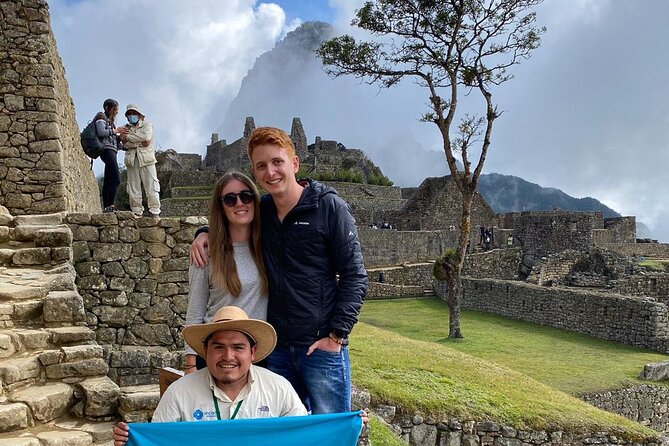
After his victory, Pachacutec ordered the construction of the palace and citadel of Pisac on a high promontory which showed this monarch not only conquered new dominions but was also fond of having new residences. However, the conquest which might be the most interesting in our times is the zone of Picchu where the Inca ordered built a palace for his return, with all his dependencies. With the passing centuries, this place would take the name Machu Picchu.
Thanks to the contribution of new archival manuscripts found by Luis Miguel Glave and Maria Isabel Remy and the subsequent research of John E. Rowe, we know that the whole region of Picchu, together with that of Ollantay Tambo were included in the private lands of the Inca.
Continuing with his military triumphs, Pachacutec accompanied by Inca Roca, took over Amaybamba in the La Convencion valley and in the central part of the valley he had a palace built for himself which he called Guaman Marca. In the same document which tells this news it says that the following sovereign, Tupac Yupanqui, brought numerous mitimaes from Chachapoyas to populate the lower part of the valley with the obligation to plant coca fields.
In addition, the manuscript mentions the presence of another palace called Yanayacu in the high part of Amaybamba. When I was in that place the former landowner of a large farm told me that in that region there is talk about such ruins but that they still had not been found.
Having secured his power and assured his dominions near the capital, Pachacutec embarked upon conquests farther away. Thus he dominated the Soras and the Lucanas and brought their dual chiefs prisoners to celebrate his victory. Other lords, on seeing his growing power preferred to accept his "pleas" for reciprocity and not risk their lives in a dispute.
After resting for a time, the Inca once more reunited his armies and this time he decided to go against the lord of Collao. Thus he faced the feared lord of the Collao, Chuchi Capac of Hatun Colla whom he conquered after an arduous battle. With this triumph, the Cuzqueñans made themselves owners of the extensive lands of Chuchi Capac, which included jungle enclaves that produced the valued coca leaves and the lands situated on the coast where they obtained maize, hot peppers and salted fish. These were the first contacts with the coastal ethnic groups.
Subir
Planning the New Cuzco
Old Cuzco becomes depopulated
From the first years of his government, Pachacutec concerned himself with the reconstruction of Cuzco. The chronicler Sarmiento de Gamboa tells that the Inca strolled about the city looking intently at his surroundings.
To fulfill his wishes, he decided to strip Cuzco of its inhabitants in order to put a new plan into effect and to allot plots of land and properties to those considered should live in his capital. Cord in hand, the Inca himself measured streets and open spaces to the great satisfaction of the royal lineages (panacas) and ancient ayllus, guardians of the sovereign.
Until then, Cuzco was nothing more than a rather puny, rustic village frequently flooded by two small rivers, the Huatanay and the Tulumayo.
The reconstruction began with the canalization of the two rivers to prevent a bog forming in the rainy season and the irrigation canals to bring water for the city. Betanzos narrates the way he went about the renovation of the city. Pachacutec, making use of reciprocity, summoned the principal curacas and the Andean authorities to come to the capital. After the customary celebrations, they deliberated about sending ten lords with the mission of going around to all the towns in search of subsistence and suitable quarries.
When all the problems were resolved, the lords sent people to Cuzco for the construction. Some had the task of transporting rough rocks for the foundations, others brought sticky mud and they added straw or wool to make adobes, others collected alder wood. The architect Gasparini assumes that expert stonecarvers came from the Collao, a heritage from the old Tiahuanacotans.
Inca plazas were extraordinarily large, trapezoid in shape and social and religious activities took place in them. The rite of reciprocity took place in the plaza of Aucaypata and in it the ayllus and royal lineages met to eat, drink and dance the ceremonial dances of the Cuzco calendar.
Also in that plaza celebrations of the Inca armies' triumph took place, which consisted of spreading the booty obtained and the lords held prisoner on the ground. The sovereign walked over them as a sign of the submission of his enemies and of his power over his new territorial acquisitions.
El Coricancha
Pachacutec put all his determination into the reconstruction of the sanctuary of Inti Cancha or the Chamber of the Sun which until then was rather poor. Not only were the walls dressed with exquisitely carved stones but the decorations were an extravagance of gold. The first Spaniards who saw the sanctuary in all its splendor, recount that there was a garden with plants, flowers, birds and insects in precious metal. The principal chambers of the sanctuary were dedicated, one to the Sun, others to the Moon, Thunder and the Rainbow, all communicated with the golden garden. Different stories say that the Sun was represented on a wall with an ovoid gold sheet of gold, while Garcilaso mentions a face. It is possible that through time there were changes in religious trends.
The mummies of the ancient sovereigns were conserved in the temple and were carried to the plaza for the great ceremonies. In the room of the Moon were kept the remains of the coyas or queens stationed along the sides of the callanca. Only the mother of Huayna Capac, Mama Ocllo, looked straight ahead at the night star.
Religious Changes
Most of the chroniclers mention religious changes occurred after the war against the Chancas. It seems as though the principal priests helped the flight of the Inca Viracocha and were ready to surrender to their enemies.
After the triumph of Cusi Yupanqui, the future Pachacutec, the situation became uncomfortable for the priests. Besides, the young prince needed a father to name him as the new sovereign. In view of the refusal of Viracocha to step on the spoils of the prisoners, Cusi Yupanqui went toward the temple of Inti Cancha and asked directly for the approval of the Sun. Since then, the sovereigns were considered Children of the Sun.
Thus a religious change was produced since previously the cult of Viracocha prevailed which only had one temple in the Inca State while the emphasis was on solar influence.
Naturally these deeds did not affect the worship of the manifold existing huacas and idols. Pachacutec wanted even more for the main huacas to remain in Cuzco and he granted them servants, lands and goods. It was a question of controlling possible rebellions inasmuch as the natives of the region would not rebel out of fear of the reprisals that could be taken against their idols.
Subir
Tupac Yupanpanqui’s Conquest
The Inca armies and the warrior mita
At the beginning of Inca rule, the armies formed only after the harvests had been stored in bins and the soldiers marched accompanied by their wives, whom the Spanish called camp followers, who took care of their men, their food and curing their wounds.
Later on, with territorial expansion it became impossible to maintain these traditional practices and regular armies were created through the warrior mita. This system permitted the formation of troops for distant conquests like Charcas, Chile and Ecuador. Soldiers were absent for years and many never returned to their towns.
Tupac Yupanqui organized his armies by squadrons according to the weapons the armies carried and they marched with captains of their same ethnicity. There were carriers of clubs, slings, bludgeons, spear-throwers and other weapons. There was no lack of musical instruments such as drums, marine snail trumpets and flutes. The soldiers went dressed according to the customs of their towns of origin, displaying plumes and feathers and wearing medallions of copper, silver or gold according to their hierarchy in the army. In some regions they painted their faces. On initiating an attack they sang and shouted to instill terror in the enemy. The chroniclers tell that the shouting was such that little birds in the countryside fell to the ground in terror.
One of the first conquests of the young Tupac Yupanqui was to head toward Chincha. Some time before, the general Capac Yupanqui had carried out a first incursion into the zone and had achieved recognition of Cuzco sovereignty. In addition, he had gained certain advantages such as the building of an Aclla Huasi with its endowment of mamaconas who made textiles and drinks to cover the necessities of reciprocity and religion, in addition to the construction of a house called Hatun Cancha, for the Inca administration.
The arrival of Tupac Yupanqui confirmed the ties of reciprocity with the people from Chincha and the Inca requested greater state lands. The local curacas preferred accepting the terms of reciprocity to venturing into a war which they would probably lose and ruin their exchanges. That method explains rapid Inca expansion seeing as how the mere presence of the Cuzco troops was enough for annexing the macroethnicities of Tahuantinsuyo. However, although the system favored the rapid growth of the State, it was also a determining factor of its fragility since it was the appearance of Pizarro's followers was enough to eliminate the tenuous tie formed by reciprocty between the ethnic authorities and the Inca sovereigns.
Subir
Capac Yupanqui’s Conquests
The Inca Pachacutec being absorbed with his works in Cuzco, no longer had time to continue with his expeditions. Owing to this and in view of the fact that his children were still small, he entrusted his brother Capac Yupanqui to head to the coast, to the prosperous señorio of Chincha.
There is a report of this first encounter of the people from Chincha since it was a recognition, an attempt to establish a friendly relationship instead of a conquest. Arriving in Chincha, Capac Yupanqui showed he did not want anything more than the acceptance of Cuzco superiority and heaped gifts on the curacas of Chincha to demonstrate Inca magnificence. The coastal people had no problem recognizing the Inca and continued peacefully in their domain.
The prosperity of these coastal people was due to long distance exchanges which they carried out by sea in rafts with the north, which is now Ecuador. In addition, these "Indian-style merchants" maintained overland exchanges with herds of camelids with the Collao and Cuzco.
It is only afterwards, during the reign of Tupac Yupanqui, that true territorial annexation was produced.
The second departure of General Capac Yupanqui
Some time after the expedition to the coast, the Inca reunited his armies so that General Capac Yupanqui was on his way to conquest along the Chinchaysuyu road, through the mountains.
Near Guamanga, the natives of the region of Parcos took refuge in the fortress of Urco Collac and offered resistance. Among the troops under the command of Capac Yupanqui was a Chanca chief called Anco Ayllo, who commanded a group of that nation. Under his orders, the Chancas assaulted the rebel fort with such good luck that they seized it.
The news infuriated Pachacutec because he found that a Chanca triumph diminished the "Long-eared" nobles from Cuzco and he sent a message to Capac Yupanqui with the order to exterminate all the Chancas. However, the notice was heard by one of the general's concubines, who was the sister of Anco Ayllu. The woman warned of the Cuzco intentions and the Chanca chief decided to flee with his troops to the region of the jungle that would protect his band of men.
At that time they found themselves in the mountains of Huanuco and at night the Chancas broke camp in silence and headed toward the warm zone of rupa rupa. When their departure was discovered, the Inca general pursued them but without success. Then Capac Yupanqui continued his march through the mountains reaching Cajamarca far from the limits set by Pachacutec.
In that place Gusmango Capac governed and on that occasion he allied himself with the Chimu and together they awaited the appearance of the Inca armies. Despite their number, Capac Yupanqui defeated them and obtained a fabulous booty which astonished the people from Cuzco and was spread out in the plaza in Cajamarca. It would seem the general was vainglorious for having gotten more treasures than his brother, the Inca.
Only then, Capac Yupanqui took the road to return to Cuzco with his acquisitions. When he was in Limatambo, messengers arrived from the Inca ordering the detention of the general and the death sentence for the escape of the Chancas. According to tradition, the triumph of Capac Yupanqui made him able and competent, a fact which cast a shadow on the sovereign who feared that he would rise up against him
Subir
Huayna Capac’s Government
His marriage
After the events narrated above, proceeded the preparations for the arrival of young Huayna Capac for which it was desired to give all the pomp and splendor possible. It was tradition that the new sovereign should get married the same day he received the tassel, the insignia of power. During the last two reigns the marriage had been made with a sister, but not necessarily sharing both father and mother.
The ñusta became a coya no matter how many wives the prince had before. The story of the ceremony comes from the chronicler Santa Cruz Pachacuti and seems more Andean than the rest.
Cuzco adorned itself with painstaking care and the humble roofs thatched with straw were covered with showy mantles of multicolored feathers with jungle birds. The gold of the borders of the palaces shone in the sun and contrasted with the severity of the stone.
The bride and groom, each in his or her palace, were fasting without eating salt or hot aji peppers and the priests carried out numerous sacrifices and listened to the sounds in the visceras of animals to find out the future. On the appointed day, Huayna Capac came out of the palace of his grandfather Pachacutec accompanied by the Apu Curacas or great lords of Collasuyu in richly adorned litters.
Meanwhile, the ñusta named Cusi Rimay departed in litters from the houses of her father Tupac Yupanqui escorted by the great lords of Chinchaysuyu, Cuntisuyu and Antisuyu. It is not known why this privilege of the young lady to be conducted by the members of three suyu while for Huayna Capac it was only one. It is possible that she was a maid of higher social rank than her future husband. Once he became the only lord, Huayna Capac did not go far from Cuzco at the request of his mother, Coya Mama Ocllo who loved him very much and feared a long absence from her son. For that reason he sent his uncle, Guaman Achachi, to visit the long route from Chinchaysuyu to the extreme north while he remained looking over the places close to Cuzco and the Collao.
It was the Inca's concern to maintain territorial acquisitions and continue to expand his dominions. Nevertheless, in the peripheral regions of Tahuantinsuyo, in Chile as well as in present day Ecuador, places farther away from the centers of old cultures, there was no custom of reciprocity which had facilitated expansion of the State. Peoples like the Chincha submitted willingly to the Inca State because they did not want to ruin their long distance exchanges.
In the following absences from the capital, Huayna Capac went south to Charcas, Cochabamba and Pocona continuing to Coquimbo and Copiapo. According to Cieza de Leon, the Inca stayed twelve moons pacifying the region and building roads and forts. His stay was interrupted by the news of rebellions in Quito, Pastos, and Huancavilca which obliged the sovereign to return to Cuzco and gather armies.
Each expedition of the Inca demanded a special preparation. It was necessary to reunite the soldier mita, to summon the curacas to ask them for soldiers, gather together food, arms, and perform human sacrifices to flatter the gods and make them favorable. Neither could there be a lack of public meals to tighten the bonds of reciprocity between the Inca, the heads of the macroethnicities and the lords of the kingdom.
Finally Huayna Capac set off with a numerous following of chiefs, lords, and troops which got bigger along the way. Possibly the neighboring curacas went to the places through which he would pass to make their mocha and show him obedience.
During his stay in Cajamarca, Huayna Capac went to Chachapoyas where the chiefs had rebelled and taken refuge in a fort. After being vanquished, numerous Chachapoyas were sent to Cuzco as mitimaes where they were still found during the viceroyalty.
Then the Inca continued his route until he arrived at Surampalli, in Cañar territory, where he "relaxed in the extreme" because it was his native land and he changed the name to Tumibamba which was the name of his panaca or royal ayllu.
Expedition to Raura
Huayna Capac spent long years in the north of his states and it is possible that having been born in Tumibamba he preferred residing there to staying in Cuzco. In addition, the wars were numerous against the various ethnic groups of the region that had to be dominated.
In one of these encounters against the Carangue and Cayambis, the natives took refuge in a fort and in the din of the encounter the long-eared ones let Huayna Capac fall out of his litter and he would have died if it had not been for two of his lords who helped him. As a sign of protest, the Inca made his entrance into Tumibamba on foot.
Some time after these events, the news arrived of new reinforcements from Cuzco. At the head of the army was the general Mihi who because of his high rank carried the statue Huanacauri. Huayna Capac, forgetting the tradition of reciprocity ordered the general to enter immediately into battle. Indignant and permanently hurt, Mihi decided to return to Cuzco. Huayna Capac, advised of the general's conduct, ordered that he be sent large gifts that corresponded to ancestral custom. Satisfied, Mihi returned with his armies, marched to war and came out victorious.
This episode illustrates the difference between the Andean mentality and the European. In Europe, Mihi's attitude would be considered a betrayal but in the Andes, the Inca was at fault for having obviated reciprocity.
After several years news arrived from Cuzco of the death of many of the Inca's relatives and with this news Huayna Capac went to Quito to prepare for his return to the capital. However, he fall gravely ill and was covered with pustules. Feeling he was going to die, he called his priests to designate his heir Ninan Cuyuchi. But when the dignitaries went they found he had died. Meanwhile, the priest of the Sun called Cusi Topa Yupanqui and performed the ceremony of the calpa to find out the destiny of the designated ones by sacrificing a white llama.
As much for Ninan Cuyuchi as for Huascar, the other pretender to power, the auguries were unfavorable. In view of the incertitude of the situation, the coya Mama Raura, counseled by the maximum priest, left for Cuzco to force the naming of her son Huascar. The lords decided to keep the death of the Inca secret to avoid possible rebellions and after mummifying his body they carried it as though it were alive.
Meanwhile, the court advanced slowly to the south and Atahualpa who had stayed in Tumibamba tried to pass unnoticed along with part of his generals who were guarding the country against possible disturbances of the natives.
Subir
Huascar’s Government
The beginning of the quarrel among brothers
The dignitary entrusted with fulfilling the three desires of Huayna Capac and of conducting his mummy back to Cuzco was Cusi Topa Yupanqui who belonged to the panaca of Pachacutec and was a kinsman of the mother of Atahualpa.
After the funeral cortege arrived in the capital, the nobles entrusted with the trip were severely reprimanded by Huascar for leaving Atahualpa in the north and they were accused of conspiracy. Their protests and affirmation of their innocence were useless. Despite the torment, they didn't confess anything. Nevertheless, Huascar ordered them killed thinking that if he spare their lives they would always be dangerous enemies.
The events displeased the lords of Huayna Capac's following and apparently some of them returned to Quito without waiting for the ceremonies.
Meanwhile, Atahualpa went to Tumibamba to order the construction of a palace for Huascar, an attitude that displeased the curaca of Tumibamba named Ullco Colla who sent secret messengers to Huascar complaining about the project, insinuating Atahualpa was attempting a rebellion. To ingratiate himself with Huascar, this prince sent rich gifts to Cuzco, but the Inca's fury mounted and he killed the messengers ordering drums to be made from their corpses. Afterwards Huascar's ambassadors left on their way to Quito with feminine articles of clothing and makeup for Atahualpa. These episodes were the cause of the break between the brothers. Atahualpa could no longer return to Cuzco as Huascar had ordered since he would have gone to a sure death.
According to the chronicler Cobo, the generals of Huayna Capac who stayed in the north were those who pushed Atahualpa to rebel since they judged that if they went to Cuzco they would not have the same situation with Huascar as that which they enjoyed with Atahualpa.
In these circumstances, the Cañaris in favor of Huascar took advantage of Atahualpa's negligence to make him prisoner and they locked him up in a tambo, but during the night Atahualpa succeeded in making a hole in the wall with a copper bar a woman provided for him and silently escaped. Afterwards he would recount that the Sun, his father, transformed him into an amaru (serpent) and thus he escaped.
Once free, Atahualpa headed to Quito where he reunited an army to march on Tumibamba. After the victory he inflicted a harsh punishment on the Cañaris. Then he went to the coast and arriving in Tumbes he wanted to dominate the island dwellers of Puna and he embarked in numerous rafts. Those of Puna offered resistance and a naval battle was begun which the islanders, expert raftsmen, won. As for Atahualpa, he came out of it wounded in one leg, decided to return to the land and not stop until he reached Quito. Then the curaca of Puna attacked Tumbes and razed the town. In that state Pizarro found it when he arrived on its coasts on his third voyage. In addition he found on the island some six hundred captives from Tumbes belonging to Atahualpa's troops.
Huascar's mistakes
While Atahualpa started an open rebellion against his brother, Huascar established his government in the capital. At that time he had the support of the nobility and of the leading class of Tahuantinsuyo. But he did not know or did worry about keeping his prestige since he had a cowardly, violent, cruel and unruly character. Huascar did not give the royal ayllus the attention to which they were accustomed and did not attend public meals in the plaza where the bonds of reciprocity and kinship were strengthened.
Another reason for anger towards the Inca was that he had removed the traditional custodian ayllus from his guard and had replaced them with some Chachapoyas and Cañari mitimaes, which is to say, foreigners.
Soon, Huascar declared he wished to bury all the royal mummies and take their lands, wealth, servants and women from the panacas. At the same time he said he wanted to go from the Hanan side to Lower Cuzco These facts demonstrate the extremes to which the differences were carried between the sovereign and the Cuzco nobility that had been his best support.
Very different was Atahualpa's situation, the distance permitted him not to take part directly in the fights between lineages and he had the support of his father's generals.
Huascar's loss of prestige allowed the members of the panacas of Hatun Ayllu to which Atahualpa belonged, to maintain power intrigues.
The war
Little by little Huascar's generals began joining Atahualpa's cause. This circumstance explains the constant defeats of Huascar's armies despite his having great soldiers. Thus, Atahualpa's generals were gaining ground until Huascar was left with no other remedy than, like the sovereigns of old, to take command of the troops himself.
On the other hand, Atahualpa marched slowly towards the south leaving the handling of the war to his generals. Thus, being in Huamachuco, he sent two emissaries to consult to the famous huaca Catequil about the outcome of the war. The oracle responded that Atahualpa would have a bad end. Furious, Atahualpa marched on the place where the oracle was found with his golden halberd in his hand. When he found it, an old priest dressed in a long white tunic trimmed with sea shells. Knowing it was he who had predicted such a destiny for him, Atahualpa struck him a crude blow to the head that destroyed his skull.
By then the news arrived of the appearance of strange white, bearded people arrived in wooden houses that floated on the sea. Atahualpa did not worry about that people who arrived for the second time in his dominions. On the first occasion they left before they could have been seen and, out of curiosity to see how those strangers were, Atahualpa did not take the precautions that his generals recommended to attack them in some sort of narrow mountain pass. The Inca paid no attention and rather offered guides and food to the strangers with the order to lead them to Cajamarca where he would be.
Meanwhile, Atahualpa's generals kept on defeating Huascar's troops until the Inca imprudently put himself at risk in a narrow gorge without knowing enemy positions. Huayna Capac's experienced generals were aware of the imprudence and closed Huascar in between two armies. The triumphant troops of Atahualpa advanced toward Cuzco to the hill of Yavira. There the panacas and important lineages arrived and everybody found a place for themselves; on one side those of Hanan Cuzco and on the other those of Hurin Cuzco and they prostrated themselves to the huauque, the double or brother of the new sovereign, to render homage to him and recognize him as Inca.
Some time later a relative of the new Inca named Cusi Yupanqui arrived in Cuzco with orders, according to the consensus of chroniclers, to kill the close relatives of Huascar, their wives and children and for more extreme cruelty, burn the mummy of Tupac Yupanqui. To destroy the mummy or body of an ancestor was the worst possible punishment. The vengeance against Capac Ayllu, to which Huascar belonged, shows that the confrontation between the two brothers was a battle between rival panacas.
Subir
Ambush At Cajamarca
The third voyage of Francisco Pizarro and his arrival at Tumbes
On the third voyage, Pizarro found the town of Tumbes burned and destroyed by the attack of the curaca of the island of Puna. The Hispanics took a long time on the coast, busy founding the town of San Miguel de Tangarara and in making inquiries about that land. It was there that they found out about the fratricidal war, a situation which could be useful to them for the invasion.
According to the chronicler Mena, Atahualpa sent one of his captains dressed as a humble man to spy on the Christians. This personage then proposed to attack the Spanish army in a narrow pass but the Inca prevented it because he wanted them to climb up to Cajamarca.
Slowly and prudently the Spaniards advanced and on a field, Hernando de Soto arrived with forty men at the place in Caxas where they found a town destroyed by the war but with the warehouses full and an Aclla Huasi or House of Chosen Women. The soldiers wanted to divide up the women but Pizarro had prohibited any excess or looting which might irritate the natives.
Being in Caxas a messenger arrived from Atahualpa which worried the curaca of that place, but de Soto calmed him. The envoy brought some ducks with their necks cut and filled with straw with the message that the same would happen to the Christians. The emissary of Atahualpa met with Atahualpa and the governor, like a good diplomat, showed himself to be very pleased with the notice of the Inca and he sent him two glass goblets and a rich shirt. In addition, he offered his aid to combat any enemy of the sovereign.
For several days, Pizarro continued his walk toward the mountains until they arrived in view of the army camp of Atahualpa, who sent them gifts of roasted meat, maize and chicha. A curaca friend recommended to them that they not try even a bite for fear the food was poisoned.
At dusk they silently entered Cajamarca fearful of some armed encounter. Hernando de Soto and Hernando Pizarro asked the governor for permission to go to the army camp of Atahualpa and see him close up. The Inca was seated on a tiana or seat under the entrance of a house surrounded by his chiefs and his women. Soto approached caracoling his horse so close to the sovereign that his tassel was moved by the horse's heavy breathing without the Inca making the slightest gesture of surprise or fear. Hernando Pizarro, who had been delayed, appeared with an interpreter on the rump of his horse. The Inca offered them something to drink and promised them to go personally to the city the following day.
The Spaniards spent the night constantly on guard, fearing a surprise attack but nothing bothered them. The next day the messengers came and went without the Inca hurrying at all. Just at dusk and at the repeated insistence of Pizarro, Atahualpa decided to come into town.
The attack
Meanwhile, Pizarro divided his followers in four parts and they hid in the buildings that surrounded the plaza. In the first shed waited Hernando Pizarro with fourteen or fifteen horseman; in the second was De Soto with fifteen or sixteen horses, in the third was placed a captain with the same number of soldiers while Francisco Pizarro with twenty-five foot soldiers and two or three riders waited in another building. In the middle of the plaza in a fortress which was probably an ushnu were the rest of the people with Pedro de Candia and eight or nine harquebusiers plus a small cannon.
Slowly and deliberately the Inca entered the plaza after which his soldiers partially filled it and he was surprised to find it empty. When he asked about the Spaniards they told him that they stayed hidden out of fear in the sheds. Then the Dominican Valverde advanced with much solemnity with a cross between his hands accompanied by Martinillo, the interpreter, and pronounced the formal requirement to Atahualpa to embrace the Catholic faith and serve the king of Spain, at the same time as he gave him the gospel. The dialogue which followed is narrated in a different way by all the witnesses. It is possible that the tremendous anxiety lived in those instants prevented remembering later the exact words that passed between the various actors in the tragedy.
Behind the Inca in another litter was carried the curaca of Chincha and in one moment Pizarro vacillated, not knowing exactly which one was the Inca. Nevertheless, he ordered Juan Pizarro to go toward the curaca and he and his soldiers advanced toward the Inca.
At a signal from Pizarro, the silence charged with threats was transformed into the most tremendous uproar. Thunder exploded from the small cannon and knocked over the trumpets, it was the warning for the horsemen to come out of the sheds. The bells of the horses sounded, the deafening shots of the harquebuses, there were shouts and screams everywhere. In this confusion, the terrified indigenous people, in an effort to escape, knocked over a stone pirca of the plaza and succeeded in escaping. The horsemen hurled themselves after them, catching up with them and killing those they could while others died crushed by the human avalanche.
Meanwhile, Juan Pizarro launched himself in the direction of the lord of Chincha and killed him in his litter. On the other hand, Francisco Pizarro with his soldiers massacred the natives who desperately held up the Inca's litter. Seeing the situation, a Spaniard took out his knife to finish Atahualpa off, but Pizarro prevented him from coming out of his litter with his hand wounded and ordered that no one touch Atahualpa. Finally, the Spanish grabbed hold of one side of the litter and managed to tip it over and seized the Inca.
By nightfall of that fateful 16 November 1532, Tahuantinsuyo had ended forever. The Sapan Inca was captive and with his imprisonment came the end of the autonomy of the indigenous State. Transcendental events would bring fundamental changes not only for the Andes but also in Europe.
Subir
Inca Collapse
Causes of the fall of the state
The spectacular collapse of the Inca state was produced for a series of reasons which can be divided into two types, the visible causes and the deep causes. The visible foundations are well known, the fratricidal war which kept the power and the command divided, the surprise factor taken advantage of in the Cajamarca ambush, the European technological superiority in reference to arms, that is, the harquebus and the cannon, the steel sword and the presence of the horses.
All these reasons weigh in the occurrences but they were not the only things that determined the triumph of the Hispanics. There were other elements that acted in a decisive manner on the Inca defeat, knowing the lack of national integration because of the indigenous people not having any consciousness of a united front against foreign danger and the lack of cohesion between ethnic groups.
The Inca state was not considered by the indigenous people with any concept of nationality. Moreover Inca hegemony did not try to annul the existence of the great ethnic lords because their socioeconomic structures were supported by them and did not suppress their peculiarities. For the Inca it was enough for him to receive the recognition of his absolute power that gave him access to the work force needed for his government works and the designation of state lands and lands for religion in the whole territory. The only centralizing measure ordered by the sovereign was the implantation of the same language in the whole country. The intention was to facilitate negotiations and administration in view of the plurality of languages and dialects. An examination of Andean society at the end of the sixteenth century stands out as a hierarchized society, composed of macroethnicities governed by hatun Curacas or great lords who in turn had a series of lesser lords under their authority. Nevertheless, for the great lords the coming of the Incas meant a loss of power and a good part of their former riches. Their best lands passed to the power of the State with the local people working their fields and the usufruct filling the government warehouses.
In spite of the grand gifts perceived by the curacas through reciprocity, it did not compensate for the loss of liberty and the imposition of the Cuzco yoke. The situation of the hatun runa or common man was not more satisfactory with the creation of the warrior mita and the massive moving of mitimae populations. Thus the Inca state at the death of Huayna Capac was not the utopian state painted by some chroniclers. On the contrary, discontent animated a good part of the population and it is for that reason that with the Hispanic arrival and the civil war it seemed to the curacas to be the right moment to lay reciprocity with the Inca aside and take advantage of the foreigners to exchange loyalties with them. .
An undeniable discontent must have reigned among the lords and among the popular classes, a dissatisfaction that gave way to a desire to shake off Inca influence. These feelings explain the good welcome offered any the native people to the followers of Pizarro. It is for these reasons that the Spanish were massively helped by the indigenous lords with armies and porters for food, weapons and goods of all sorts. It was not a handful of Spanish who broke the Inca but the Andean people themselves, unhappy with the dominant situation, who believed they had encountered a favorable occasion to regain their liberty. If their calculations failed it was due to the natural ignorance of future events since they did not know the imperialistic desires of the Spanish crown nor of their extensive conquest in Mexico and the Caribbean.
Violent epidemics
Before the Spanish set foot on the soil of Tahuantinsuyo, the epidemics had already advanced and had taken hold in the land with unusual violence. On the first voyage of Pizarro from Panama, perhaps on the island of La Gorgona or on the mainland, a white man and a black man fell ill and infected the local population. From there, it spread like wildfire, the sickness that spread uncontrollably, showing no mercy against innocent people in the face of those new diseases. These illnesses were eruptive diseases like smallpox, chicken pox, measles, etc., and the common cold. The native people were struck by diseases common in Europe but against which they had no genetic resistance. A fatal contribution from across the seas.
After the first devastation, the epidemics became recurrent. There were so many and appeared so often they annihilated entire ayllus. Thus we find in the zone of Huarochiri a list from the eighteenth century of some communities that disappeared due to illnesses. Next to the ayllus figures the word "finished".
Undoubtedly the epidemics weakened Andean resistance against foreigners and facilitated the invasion. According to estimates by the historian David N. Cook, the demographic fall reached up to the end of the sixteenth century, 90% of the prehispanic population and the disappearance of almost all of the inhabitants of the central coast affected directly by the civil wars between the Spanish, the excess of tribute and the building of the City of Kings.
Subir