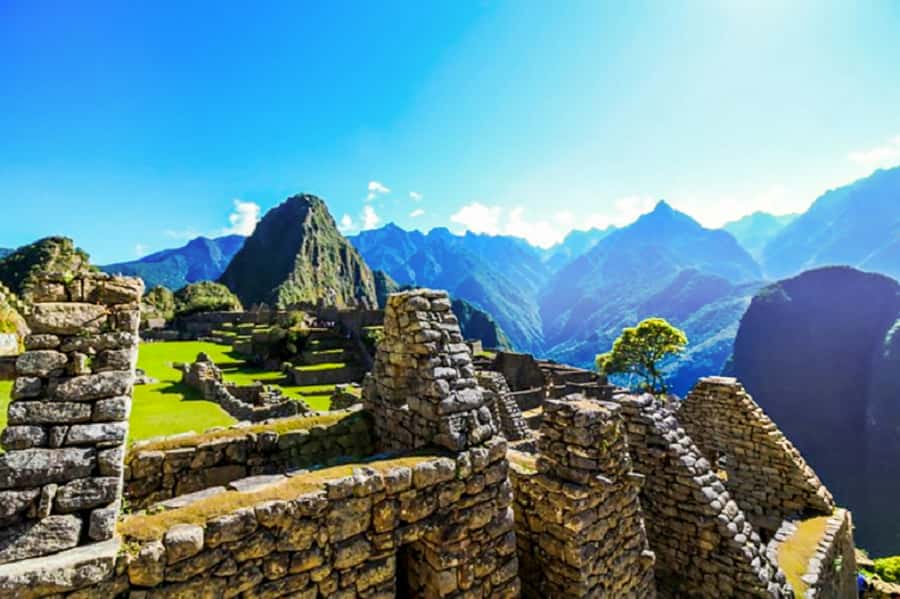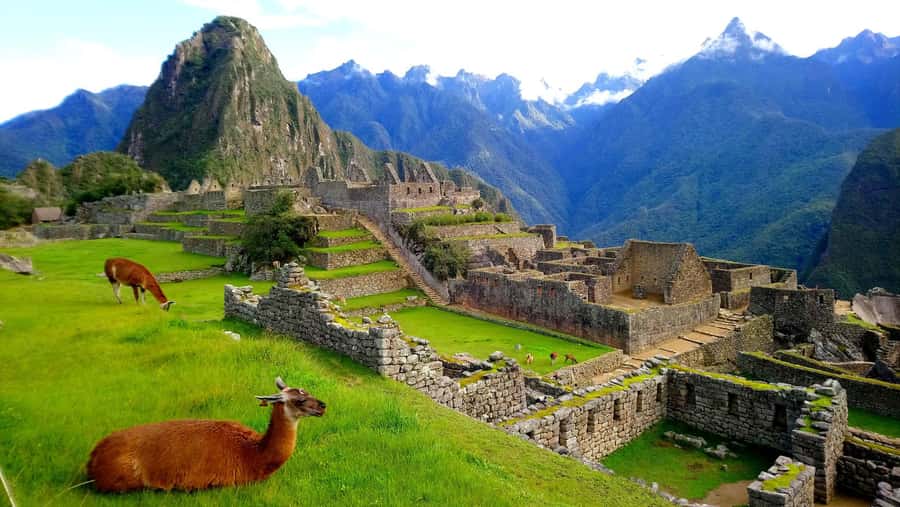
The US explorer Gary Ziegler suggests that Choquequirao may have been the place where the last Inca, Tupac Amaru, was raised among Inca Priestesses. The abundance of many double jamb doorways and niches indicates that the place was held in high status.
The ruins were first visited and described to the western world by a French explorer during the 18th century. Hiram Bingham visited the site in 1910. This was his first experience of "lost cities" prior to his discovery of Machu Picchu in 1911. The remoteness and inaccessibility have discouraged visitors until fairly recently when COPESCO constructed a footbridge over the Apurimac River below the ruins. Even today the ruins are still rarely visited although, with the enforcement of new regulations on the Inca Trail, Choquequirao is destined to replace the traditional hike as the serious trekkers alternative.
History
The local settlers, those that live in Abancay or Curahuasi in the creek of the Apurimac river even say that Choqequirau was the place where the last Incas had taken refuge who left the Cusco after the defeat of I complete king of the Tahuantinsuyo - Manco Inca - that resisted during four decades - between 1536 and 1572- to the Spaniards, who already had seized of the Cusco, the capital of the empire. That was what I listen to Antonio Raimondi, the Italian naturalist who crossed all Peru to half-full of century XIX, and that was also the reason for which this place woke up as much interest in the travellers who arrived until that region doing one long one and laborious passage of several days for reached the place where they were the ruins.
What was then era very little: a few walls of incaico type, are the beautiful parameters of style cusqueño, in the middle of a forest that covered everything. The count Of Sartiges, French adventurer of the time, went to Choqequirau in the 1834. After several days of long walk,hoping there supposed treasures that would have left the Incas of the resistance,I arrive at the site with a heavy company of local farmers and did what surely all the travellers did:to dig the floors and to break walls in search of the treasures: "in my projects to make excavations and to make surveys, they did not have counted with one of the unavoidable consequences of the abandonment of the land during centuries: the vegetation that invades everything.
Nonsingle the streets, but the houses and the same walls were covered with trepadoras plants. Impossible to draw the set of the city... we made clear the seat and the buildings... While it occupied to me in drawing the old houses of Choqequirao... My coassociate excavated in the Earth by where they want that they believed to recognize tracks of some burial... Nothing was buried with them, neither glasses nor awkward people... My companions dug through one of false puertas(nichos) of the great triunfal Wall... Behind was the alive rock... "without a doubt, if sometimes there were treasures, these were expoliados from century XVI. Then already one knew the incaicos establishments the region, whose wetitleh in gold and other secrets - they were combined like the mystery that a clandestine one surrounded and "lost capital" of the five rebels.
They know a document 1710 that mentions that "Chuquiquirao" is one of four "old towns of the gentilidad" in the region of Vilcabamba - zone of refuge where I settle the government of the resistance next to the Chuquitiray, Vilcabamba the Great one, "main room of the Inga", and a town of silversmiths of the Inca. All of them are mentioned in relation to gold and silver, and writing affirms in raised by Don Juan Aryan Diaz Topete that "it verified and I describe... to be certain the news which by old traditions they were had of the wetitleh of these parajes".Carlos To Romero, that in 1909 made a meticulous search of which wise on Choqequirau until then, indicates that in 1768 already documentary references existed on the place. It was not, because not known, and the news of its existence had to be accompanied of the ambitious curiosity of the adventurers.
In spite of little that was seen, and it also weighs to the fact of not being the waited for treasures, is comprehensible that the fame of the site stayed throughout the centuries: the spectacle of those few samples of incaica architecture indeed impressive era. Leonce Angrand, a wonderful retratista, vice-consul of France in Peru between 1834 and 1838, I visit the ruins and made a plane and excellent notes to coal of the wall to which Of Artiges baptism like "wall triunfal"(del triumph or of the glory), by its beauty and monumental character.
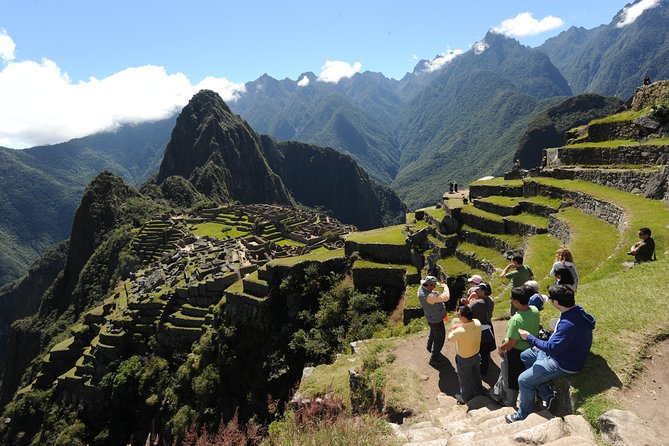
The buildings were known little by little and, in fact, today same they are known the whole after Of Sartiges made the first intervention well-known of the ruins, Hiram Bingham that took part in the site in 1909. it also made at the request of the settlers of the Apurimac. The supply was that it was going to find completes capital of the Incas. With this visit, Bingham beginning its search of esa"ciudad perdida", that I take to discover it machu picchu in 1911, after misestimating that choqequirau outside the mysterious one you take care of. According to this North American student, Machu Picchu, - and nonera "the lost city". It was as well as the enthusiasm by the visit and the fatigosas campaigns of the finders of treasures stopped. With greater timidity, the inhabitants of the Apurimac continued repeating their traditions, but the flow of the visitors went towards Machu Picchu, whereas the conditions of access to choqequirau stayed equal to the existing ones towards centuries.
Single from the decade of 1960, when already it was clear that either the suitable arguments did not exist to identify to Machu Picchu like the "city perdida", and which but valuable that the legend was the sites by themselves, the Peruvian State took part in the site and beginning the partial cleaning of the place (this process tube a single extensive character from the decade of 1990, when it took in him the Copesco plan, with the intervention of a professional outstanding group of archaeology and the restoration). Nobody this in conditions for maintaining that in this place the Incas did not live on the resistance between 1536 and 1572, even though exists sufficient information on other places could settle down the rebels. Of any way, the site this in the zone where the wave leaders were based resistance Inca, and this, with exception of Machu Picchu, it is the place of greater meritos to be occupied by people of elite. his accesses are the sufficiently difficult ones like having a condition of reserve in front of visitors nonwished.
The observation of the site induces to propose an outstanding paper to the monument, not as much in the elegance of its equipments, that are done with united stone of field with mud, or by their parameters, which they had to be covered with stucco, but by the form and organization of the diverse enclosures that constitute it. Most of the buildings does not have a domestic function, and in its majority, they must be considered like structures with public function, apparently ceremonial.
The high section of the site is almost strictly for this,al use just as the Ushnu and the set of the low part. It is as a sanctuary whose occupants had to be, but amautas or selected priests and to the service of the cult. When it is arrived at Choqequirau, it is from the town of Cachora, by the south,o from any other place, which emphasizes is a trunkated cone hill, with an ample and flat circular space in the peak, whose slopes have been Ushnu call, name that had sanctuaries that were raised in visible places of the incaicos but important establishments. They were constructed as a platforms - generally piramidales or trunkated cone-for the execution of propiciatorios rituals in the great festivales of tawantinsuyu.
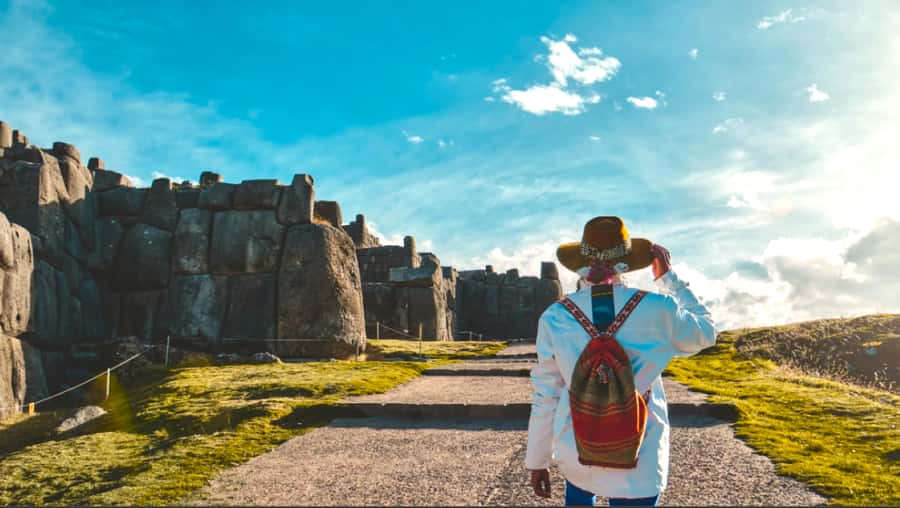
They were part of the cult to mountains (apu), artificially raised in the sagradas seats (wakaypata) as opposed to to the spaces where to the faithfuls for their cults and festejos met. It is presumed that the Inca or his representatives and the priests and other notables occupied the top. Sight as we see it now, seems to be a hill whose part but broad this surrounded by a wall that turns east space a circular luck of seat. From it is descried to everything there impressive landscape of the surroundings, with the Apurimac river 1,500 meters towards the north. One lowers towards them by a way that surrounds the hill and arrives until the "wall triunfal"de From Sartiges. It is in this point where the Ushnu acquires a monumental character, because that "wall" is truth is part of a low platform of the hill that appears like a lobby for the ascent; one is beautiful a porch that this forehead to a rectangular seat flanked by two slopes of great slope which they form a luck of neck of union between the hill and ciudadela. The "triunfal wall" is an architectonic allegory.
One is in fact a porch constructed by a set of niches, of one or two jambs, that play unevenness, as much in depth as in height; they simulate frontis of a complex building, with several entrances, even though single one of them is a bay that leads towards the Ushnu, whereas the others are niches adhered to the rock. This way, all the set becomes a single wall. By the entrance, that this to the east of the porch, is acceded to a narrow platform where there is a quadrangular enclosure to which they call "viewpoint to him". He is "vestibulo"del Ushnu.
The seat that this to the north of the elegant porch "of triunfo"es also a viewpoint, from where the depths of the Apurimac and the wooded surroundings of the ruins are appraised, to which the descriptions of Of Sartiges gives the poetry him which they deserve: "From Huadquiña to s ruins of Choqequirao not we went to find but Shelter which the vault of the forests nor another place of rest which the forest of the torrents... where... the pretty blue butterflies, green the gilded serpents and cotorras announce to the eyes enchanted the warm region with their splendid population of canoras birds and with dazzling plumage" From this rectangular seat enters, almost of imperceptible way, to a great pentagonal seat surrounded by the set of buildings that identify like "the Palacio".Un group of three quarters this in the southwestern side and one long" callanca "of four doors in the side the west. The three houses are associate to a source done with stone slabs, as a bath, that this in the enclosure of the South end and that is fed on water by means of a fine drain that leads I eliminate from the high part of ciudadela.
The western building, as a "callanca", is in fact, the one that in front of gives the seat and this fact with a careful architecture. It has four entrances, that in addition are put in with long and narrow niches; in the interior, all the walls have niches of almost two meters of stop - as if they were arranged to receive to a numerous group of people stopped within them - that in addition had a closing system which we are not even in conditions for understanding. All this is part, obvious, of a sacralizado space, and but that palace, the paper of this building could be assumed like part of a portable titlear or temple, with rites that we cannot describe at the moment. The northern front of the seat gives access to a building that is, clearly, a house of two floors. The entrance to the first level towards from the seat by two doors, whereas to enter the second floor one was due to raise a lateral platform by means of a door that this in the front the west. A long passage, next to the said house, leads to other two similar houses that are had the south to north.
subir
ATTRACTIVES
Área Intervened (1)
Equivalent al 20% of the 1810 you have. That understands the archaeological assembly. Official of the Plan Copesco affirm that, to be achieved the financing, the intervention of the area ftitleante would culminate the year 2011.
Pikiwasi(2)
They are ambient quadrilaterals, circular, that define intermediate passages and parallel passages of where part short stairs. They could have been popular houses.
Sector Punctures Unuyoc (3)
They are at least 57 agricultural terraces, whose construction differs from the others. At the top of these there is a construction that could be a temple with rooms and water pick up. (4).
Railway Platforms Of Production (5)
It is a system of railway platforms located in the western slope of the plaza, formed by 150 arranged narrow terraces in two columns, with channels, stoops and a source of water.
Arariwa(6)
Is the dwelling of the small Farm Kamayoq, the responsible priest for the care of the cultivations. This it conformed by a temple, a source of water and the environment destined to its dwelling.
Paraqtepata(7)
It is a system of composed railway platforms for 18 terraces distributed in three columns, with continuous stairs and channels that arrive from a source that is found in the central part.
Taken part area
Sector I (Hanan)
It occupies the superior part of the set and they conform a ceremonial orifice Hanan (1) of two levels, next to as this the entrance of the main water channel (2) that circulates until the Urin sector and two ceremonial sources (3). In the North side of the seat 4);n in the South side is a perimetral wall (rises one Kalanka(5) that watches towards the south with a single bay of access and, at a low level but to the south, a triangular patio (6) and two small separated atmospheres of a single level by a passage. On the foot of this sector there are enclosures Kalanka type (7 to the 11) that they could be deposits or qollqas, and platform made up of 16 terraces (12 to the 13) with ornamentales walls and hornacinas.
Sector III (Urin)
There are enclosures to the west of the seat (14). Third of them it has sources that receive the water of the Hanan sector. The building principal(15), that is a Kalanka of a single level with vain cuatros of access, with low hornacinas in the interior, surrounded by cajuelas which they even keep hoops to support to woods and curtains. They follow enclosures that seem elegant rooms of two floors (16) which it is entered by a common passage. The other atmosphere that defines the seat is one kalanka (17), of a single level and six oriented bays of access to the south. To the Southeastern of the seat there is a wall that serves like balustrade of the seat (18).
Sector IV (Wall Triunfal)
This made up of a wall with ornamentales hornacinas (19) of two levels (20). In the second level there is an enclosure (21) and one door of double jamb (22) that it gives to the access road to the Ushnu (23).
Sector V (Ushnu)
It is a platform in the top of a small hill surrounded by a wall (24).
Sector VI (Houses)
Located to the east of the hill of the Ushnu, they are buildings (25) surrounded by a perimetric wall (26), that has an access door in the side this, where divides a road that is lost in the forest (27). In the superior part of the North side four retaining walls (28) with plan exist in line gorge, that define platforms of the same figure.
Sector VII (Platforms)
They begin in the inferior part of the main Seat. They are the platforms but wide of all ciudadela (29), constructed in three levels and divided by ample boxes of stairs (30)

subir
OHERS ATTRACTIVENESS
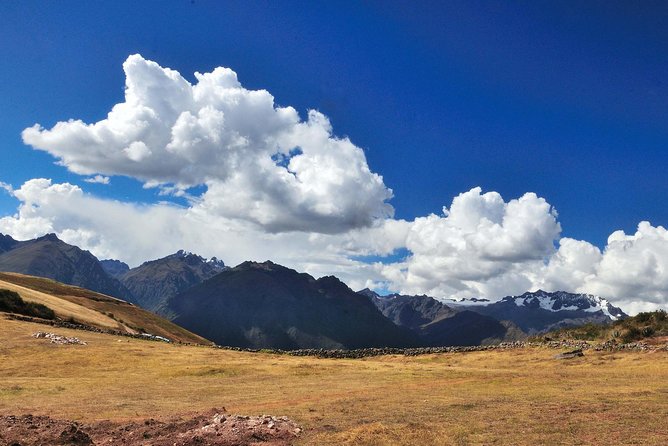
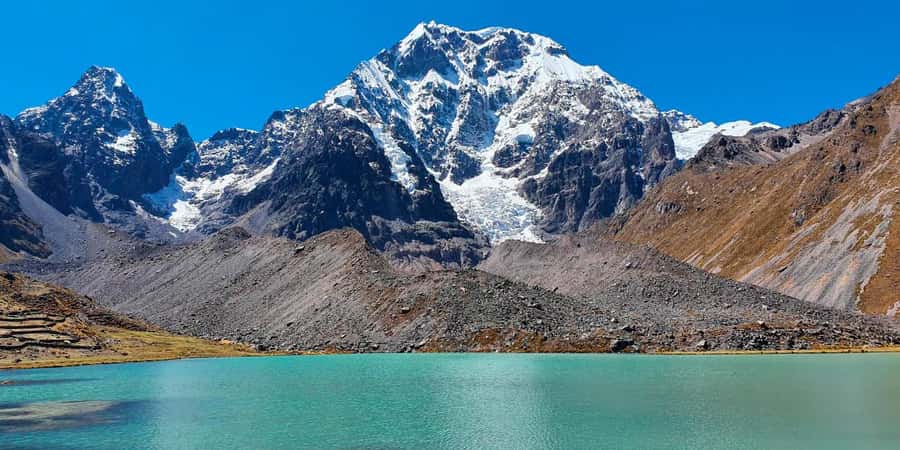
Located in the western slopes of the mountain range of Vilcabamba, that dominate the deep valley of rio Apurimac, Choqequirau is much but that a arqueologicos set of constructions and vestiges and nailed in the steep mountain eyebrow. strategic his ubicacion allows this singular sanctuary to include what podria to consider one of the titleitudinales but extraordinary transectos of pais, and to protect, in single some linear kilometros, as different ecosystems as eternal snows, masters of 6,000 ms of height, and the torridos tropical valleys, to little but of 1,800 msnm. Sight from the air, the territory that welcomes in Choqequirau shows as a great opened book, with mighty rio Apurimac on its feet and a great mountainous chain that hurries towards the Eastern slopes covered by vegetacion tropical. In the right margin of rio, this zone protects significant seccion of one of the important subriver basins but of region: the mountain range of Vilcabamba.

The little cientificos studies made in their environs have determined the existence of numerous differentiated zones of the life or, being lasa but excellent, from the ecologico point of view, the Andean pajonales high, the dwarfed forests of height and the high forest or yunga, represented by the mountain eyebrow. This great variety of ecologicos floors or habitats allows, as well the existence of an amazing diversity of species of flora and wild fauna, adapted to perfeccion to the conditions you specify of its surroundings.
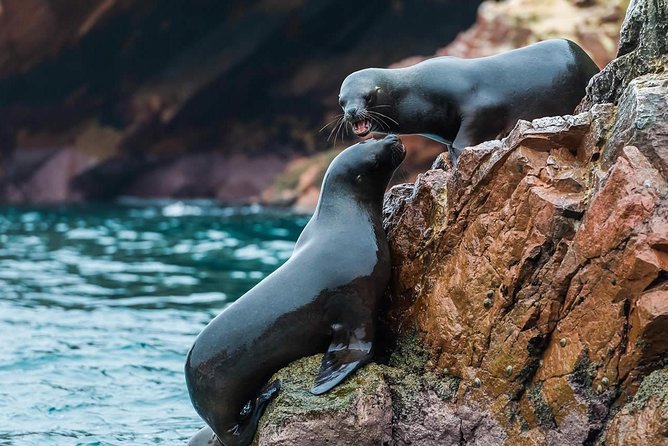
Finally, to the bottom of the great valley and down the thermal effect of the water obstacle that crosses it, the forests of the mountain eyebrow offer to their calidez and ideal conditions for an enormous variety of cultures: cocaine, achiote, maiz, cacao, the natural world of Choqequirau begins, because over the 4,000 msnm, alla where the wind sweeps plains of ichu incessantly and where the s rocks liquenes and moss fill with. It is the territory of the Andean condor and taruca, greater and but the elusivo one of the alive beings of the platforms; of the Andean fox or atoj and the zorrino or añas; of juguetonas vizcachas(erosive tipicos of the heights) and of puma or lion of the mountain range. A world of small and delicate flowers, but of intense and glad colors, that they remember the ponchos of the farmers.
A earth where the temperature variations are so intense that single some creatures manage to survive: intense sun during the day and frosts at night. Continuing with our imaginary reduction we arrived at a zone where the originating cold winds of snow-covered mountains are united to the cal8idas currents that ascend of the valley to form a stranger and exuberante miniature world. They are the dwarfed forests a scene of twisted trees where the dimensions seem to have trastocado by whim of the nature: here the trees are small and giant mosses; the private preserves, like pudu or sachacabra, reach as soon as the 20 centimeters, and the picaflores, like the bomarea or sullun sullu, the size of a dove.
It is the Earth of bromelias, the rare begonias and flowers but; the home of the Andean bear or ucumari and the toucan of height. Something but down, at heart of the gorges, the humidity reigns throughout the bath and rains are but frequent that in any other place of the country. one is the forests of the mountain eyebrow, that are the visitor of as much in as much, single when the mysterious fog veil which it covers it opens to take step to a magical and wonderful vision. This he is one of prolificos atmospheres but and strangers of the nature, a mysterious cascade kingdom and beings where the trees grow almost hung of cliffs, taking advantage of the little fertile ground that they themselves produce and subjecting to the great granite rocks which they arise of mountains.
This is the Earth of the colorful gallito of rocks the national bird of the Peru ' -, of flocks of tangaras multicolors, toucans emerald and quetzals of height; of tigrillos and coaties; the kingdom of the giant ferns, tillandsias and the orquideas, whose group reaches here but of a hundred of species, between which they emphasize spectacular wakanki (in quechua, "you cried") and wiñay wayna ("always young"). coffee and fruit trees. This was the pantry of the Incas, who resorted to her in tries of their appraised fruits but, and the continuous thing being today for the settlers settled down in its dominions.
A land of bamboo forests that bloom after decades to die in mass, like following mysterious and strange a mandate; a territory where the valleys are high and mighty and the rivers appeases their fury to take step to channels I am transparent that they lick of mountains the rich slime in nutrients. This it is, that doubts fits, the prelude of the great amazonian forests. From the environmental point of view, the main value of this ecosystem resides in the roll which the exuberantes forests that grow in the high parts of their mountains for the maintenance of the hydric balance of the region, catching the water of rains and conduciendola- without causing erosion play - towards the course of the Apurimac. If these forests disappeared, numerous species of almost unknown unique flora and fauna and for science would be lost with them; but, mainly, an irreversible process of environmental deterioration would begin in the area that would bring with himself devastating consequences for the man, like the destruction of the communication routes, the disappearance of zones of culture, earth floods and slidings. At the present time, the main threat against this natural sanctuary is the forest fires. Initiates by resident agriculturists in the zones adjacent titleoandinas, the estacionales fires - directed to renew the natural grass they become uncontrollable and they enter, helped by the wind the fragility of the vegetation, slope down towards the heart of the mountain forests. Often, the fire devastates to its step, destroying enormous extensions of virgin forest yet, until the effect of rains appeases the fury of the flames.
In recent years, the magnitude of fires has been so, that its devastädor effect I even get to transpose you limit them of the near sanctuary of Machu Picchu. Luckyly, the different sectors involved in the conservation and the development from Andean river basins, with the support of the international cooperation, come working in the development from a plan of multiple use of resources, enabling to the agriculturists about the dangers of it burns annual of titleernative grass and offering of nondestructive advantage of the resources from the area the settlers who depend on her.
subir
|