These areas award intangible status to natural areas that are also historical landmarks. At present, four sites have been designated as historical sanctuaries that protect 0.03% of Peru's land area
• Chacamarca
It spreads over 2500 hectares and shows
typical grassland vegetation. On August 6, 1824, the patriots fought a
battle here against the Spanish troops, who were finally defeated in the
Battle of Junin, a significant step towards the emancipation of Peru.
• Pampas de Ayacucho
Location: Province of Huamanga, Departament of Ayacucho Area: 300 hectares
Altitudinal Rank: 3350 to 4050 masl. Temperature: 8°C to 0°C Rainy
Season: October to March Season: April to September Type of Entrance:
Free Rntrance Tariff: adult S/.5.00 and Child S/.1.50 Access: 33
km/55mins from Ayacucho with bus Contact Office: Calle 17 Nº 355 Urb. El
Palomar Corpac, San Isidro, Lima. Telf: (01) 225-2803 / 225-1055
• Machu Picchu
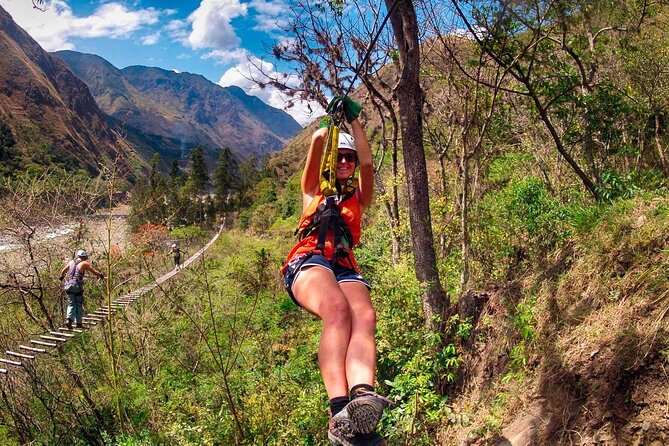
Located in the department of Cuzco, covering an area of 32 592 hectares,
the Machu Picchu Historic Sanctuary protects unique species of flora and
fauna, as well as featuring some breath-taking landscapes and preserving
the archaeological sites to be found here. Much of the beauty and
enchantment of Machu Picchu, Peru's premier tourist attraction, is due
to its spectacular natural surroundings: the cloud forest region of this
historic sanctuary.
Machu Picchu is home to some striking species, such as the
cock-of-the-rocks (Peru's national bird) and the spectacled bear, the
only bear species in South America. The area is also inhabited by the
rare dwarf deer called sachacabra and the Huemal deer, plus more than
300 bird species. The area boasts a large variety of flora species, with
some 200 species of orchids registered here to date.
Towering over the area is Mount Salkantay (6,271 meters), the highest
mountain in the Cordillera Vilcanota range, worshipped by the locals as
an apu mountain spirit. Machu Picchu combines a spectacular natural
setting with the attraction of the world's most famous pre-Hispanic
sites.
• Bosque de Pomac
This dry forest is a refuge for carob trees, birds, and at the same time
for Sican archeological remains. Here are twenty pre-Inca mounds, called
huacas, like Las Ventanas Huaca, Huaca Lucía, Huaca La Merced or Huaca
Rodillona. The archeological discoveries have been surprising because of
the quantity of gold objects found.
The Sican Archeological Project located a tomb with valuable burial
items composed of crowns, rings, masks, bracelets, necklaces, weapons,
armor, and other objects of gold and semiprecious stones like turquoise,
spondylus (red sea shell), lapis lazuli, and amber. The forest is full
of varied flora of zapote (quararibea sp), guarango, and carob trees.