Although few people are aware of this fact, it was in ancient Peru, and not in Polynesia or the South Sea Islands that the first evidence was found of men riding the waves with the help of external aids, as found on textiles and pottery dating back to pre-Hispanic civilizations.
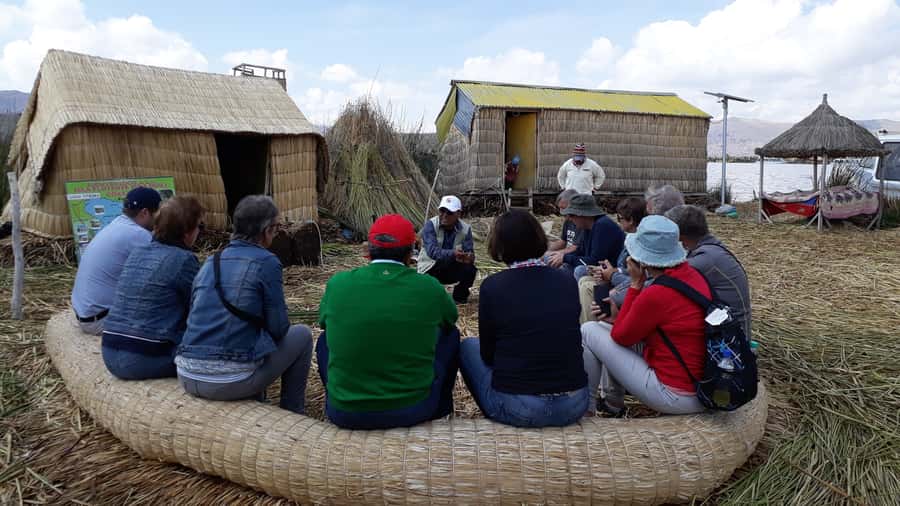
This art, believed to date back at least 2 000 years in Peru, is still practiced by fishermen in northern fishing villages such as Huanchaco, Santa Rosa and Pimentel, where fishermen venture out onto the waves on totora reed rafts during their daily fishing trips.
The Maui surfboard made its debut on the Peruvian coast in 1 942. Since then, surfing has gathered enough fans as to become one of the most widely practiced sports around. The waves off the Peruvian coast are well-known all over the world and some of the best breakers -such as Punta Rocas south of Lima or Cabo Blanco to the north- are part of the surfing world championship circuit.
Peru has ideal beaches that will satisfy the most demanding surfer all year round: the central coast features constant waves during winter (April to September), while the north coast sees heavy seas (or "crecidas") between October and March. At the same time, as there are only 12 000 surfers in Peru, compared to 700 000 in Brazil for example, one can always find empty beaches and perfect waves in Peru. All surfers have to do, is choose their favorite point.
Cabo Blanco
Located in the department of Piura, Cabo Blanco is widely held to feature the best left-breaking wave in Peru. A rapid and short wave (which makes a quick take-off obligatory) and one of the best tubes in the country. The wave can reach a height of 4 meters, although normally it ranges from 2-3 meters. The best time for surfing is from November to December. It is also a dangerous wave as it breaks over a reef, which becomes more exposed when swells wash away the sand. Wave frequency depends directly on swells coming from the north (generated in the North Pole and which pass through Hawaii).
Subir
Bayovar o Nonura
The wave that breaks at Bayovar-Nonura, located in the department of Piura, is a classic wave, running long and leftwise, reaching a height of up to 3 meters. Surfers say it resembles a train for its size and force. Access to the point involves a tough paddle out against strong currents. The beach has swells generally during summer..
Subir
Chicama
Chicama, located in the department of La Libertad, is famous for boasting the world's longest wave. It divides into four sections: the point, the cape, the "man" and the "pier". Each section is a wave in itself, with its own character and speed. Surfers say to surf Chicama, one needs an extra pair of legs. The wave is a classic left-running Peruvian wave and grows with south and west-running currents. Its ideal size is 2 meters.
Subir
Punta Rocas
The most famous surf point in Peru and home to international surfing championships (February). A big wave, which can run to five meters high. Surfers call this beach a "wave machine"; right- and left-running waves, not necessarily perfect, but constant.
Subir
Others Sports to Check Out
Mancora: The point at Mancora is located to the far south of the town with the same name, at kilometer 1 164 of the North Pan-American Highway.
Órganos: El Ņuro The beach at Organos nestles to one side of the North Pan-American Highway, at kilometer 1 152. El Ņuro is to be found 9 km south of Organos and is only accessible using 4WD vehicles.
Huanchaco: The most famous of Trujillo's beaches, because fishermen still ride totora reed rafts over the waves as the locals have done for thousands of years. The village is located just 4.5 km from the city of Trujillo, next to the pre-Hispanic mud-brick citadel of Chan Chan.
Costa Verde: Located at the foot of the cliffs that plunge down from the city of Lima, the Costa Verde is made up of a chain of beaches mainly located in the district of Miraflores (such as La Pampilla, Makaha, Waikiki and Redondo). Great for surfers of all levels, with good waves year-round.
Seņoritas: Between Punta Hermosa and Caballeros, just 44 km south of Lima down the South Pan-American Highway, this beach has become a popular spot for all kinds of surfers. This beach draws the biggest crowds in the summer, when the area's many seaside restaurants offer beach-goers a varied menu of marine dishes.
Puerto Viejo: Located 70 km south of Lima down the South Pan-American Highway, on the edge of the Caņete Valley. In the summer, the beach bustles with seafood restaurants catering to weekend campers and holiday-makers.
Cerro Azul: Just 131 km south of Lima down the South Pan-American Highway. A superb, fairly long wave. The beach offers dozens of restaurants and hostels.
Subir